
.png)
.png)
.png)
 Upload Prescription
.png)
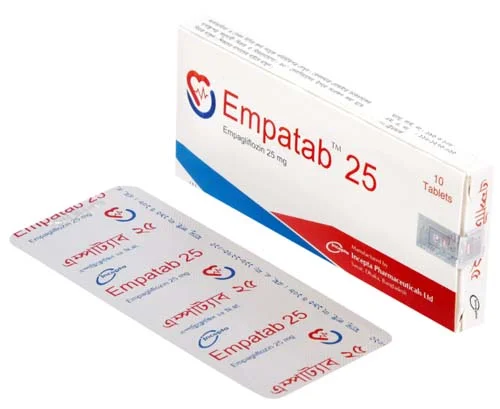
1 strip = 6 tablet
Incepta Pharmaceuticals Ltd.Product Description
Indications: Empatab M is indicated for the management of type 2 diabetes mellitus in adults as an adjunct to diet and exercise. It is used in patients who are inadequately controlled on their maximum tolerated dose of metformin alone, in combination with other antidiabetic agents when glycemic control is insufficient, and in patients already receiving empagliflozin and metformin as separate formulations.
Pharmacology: Empatab M combines empagliflozin and metformin. Empagliflozin is a sodium-glucose co-transporter-2 (SGLT2) inhibitor that reduces renal glucose reabsorption and increases urinary glucose excretion, thereby lowering blood glucose levels. Metformin is a biguanide that decreases hepatic glucose production, reduces intestinal glucose absorption, and enhances insulin sensitivity, improving peripheral glucose uptake without causing hypoglycemia.
Dosage & Administration: The dose should be individualized based on patient response and tolerability. It is generally taken twice daily with meals, with gradual dose escalation to minimize gastrointestinal side effects from metformin. The maximum recommended daily dose is 2000 mg for metformin and 25 mg for empagliflozin. Patients switching from metformin should receive a combination containing empagliflozin 5 mg with an equivalent metformin dose. Patients switching from empagliflozin should receive metformin 500 mg with an equivalent empagliflozin dose. Those already on both drugs separately may switch to equivalent combined doses. Extended-release formulations should be taken once daily with meals. Renal function must be assessed prior to initiation, and the drug is contraindicated if eGFR is below 45 mL/min/1.73 m². Safety in patients under 18 years has not been established.
Interaction: Co-administration with diuretics may increase urine output and risk of dehydration. Use with insulin or insulin secretagogues increases the risk of hypoglycemia. Drugs that reduce metformin clearance (e.g., cimetidine, dolutegravir) may increase its accumulation. Carbonic anhydrase inhibitors may increase the risk of lactic acidosis. Certain drugs such as corticosteroids, diuretics, estrogens, and sympathomimetics may affect glycemic control. Alcohol may potentiate the risk of lactic acidosis and should be avoided.
Contraindications: Contraindicated in patients with hypersensitivity to empagliflozin or metformin, metabolic acidosis (including lactic acidosis or diabetic ketoacidosis), severe renal impairment (GFR <30 mL/min), acute conditions affecting renal function such as dehydration or infection, conditions causing tissue hypoxia such as heart failure or respiratory failure, hepatic impairment, and acute alcohol intoxication or chronic alcoholism.
Side Effects: Common side effects include urinary tract infections, genital mycotic infections, diarrhea, nausea, abdominal discomfort, flatulence, and headache. Other reactions may include hypoglycemia (especially with insulin or sulfonylureas), increased urination, dehydration, pruritus, rash, and increased serum lipids. Rare but serious effects include diabetic ketoacidosis and lactic acidosis.
Pregnancy & Lactation: Use during pregnancy, especially in the second and third trimesters, is not recommended due to potential fetal risk. It is also not recommended during breastfeeding.
Precautions & Warnings: There is a risk of lactic acidosis associated with metformin, which requires immediate medical attention if suspected. Monitor patients for hypotension, especially in those with volume depletion. Assess for ketoacidosis even if blood glucose is not significantly elevated. Risk of acute kidney injury should be considered, and the drug should be discontinued if renal function deteriorates. Increased risk of urinary tract infections and rare conditions such as Fournier’s gangrene have been reported. Vitamin B12 levels may decrease with long-term metformin use and should be monitored. LDL cholesterol may increase and should be evaluated periodically.
Overdose Effects: High doses of empagliflozin have not shown significant toxicity in studies. Metformin overdose may lead to lactic acidosis, which is a medical emergency requiring hospital management. Hemodialysis is effective in removing metformin and lactate.
Therapeutic Class: Combination oral antidiabetic (SGLT2 inhibitor + biguanide)
Storage Conditions: Store below 30°C, protected from light and moisture. Keep out of reach of children.
Similar Products


Previously Browsed Items
.jpg)
.jpg)




Copyright © 2026 | Saf1AidRx | All rights reserved