
.png)
.png)
.png)
 Upload Prescription
.png)
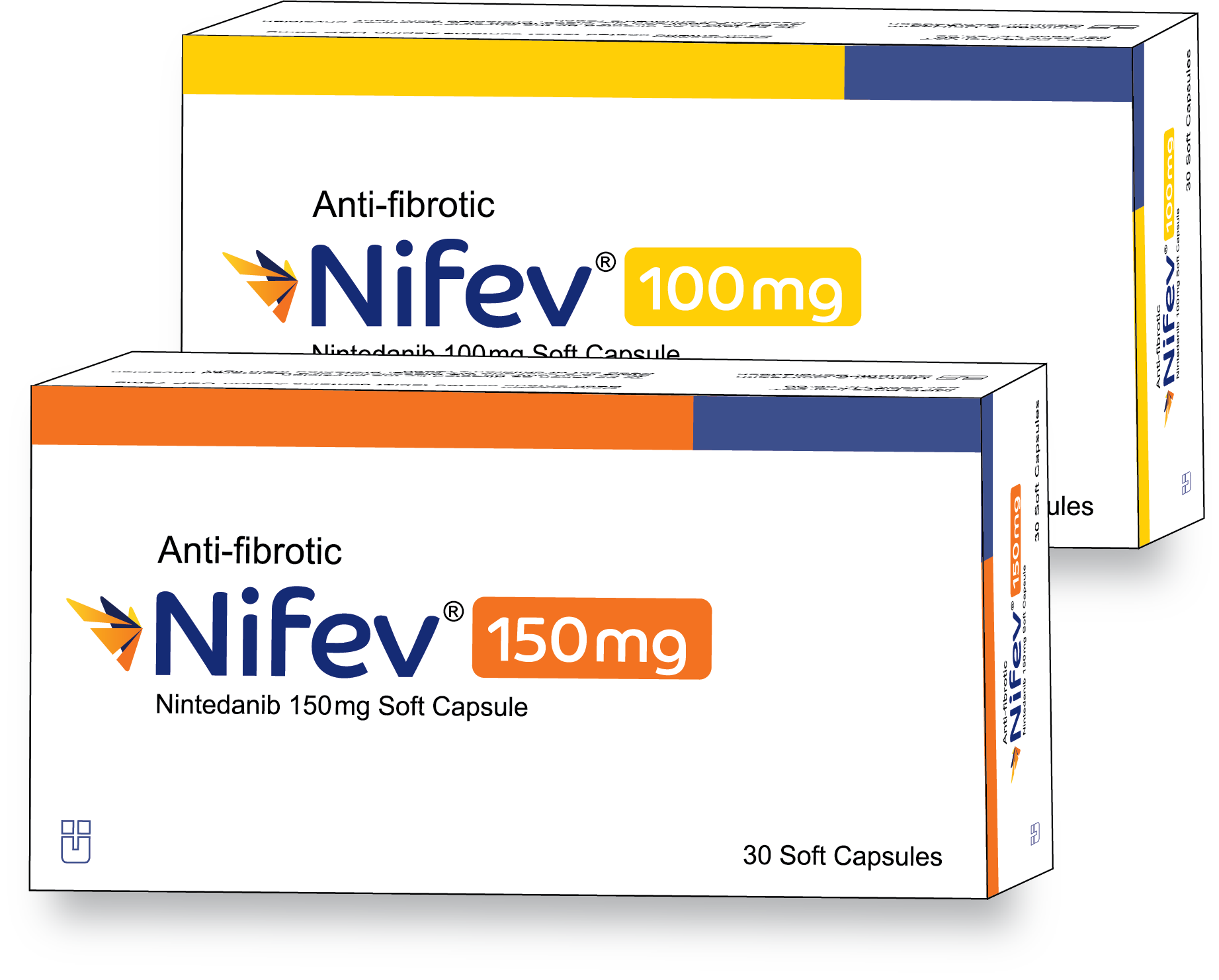
1 strip = 10 tablet
UniMed UniHealth Pharmaceuticals LtdProduct Description
Indications:
Nifev is indicated in adults for the treatment of Idiopathic Pulmonary Fibrosis (IPF), progressive chronic fibrosing interstitial lung diseases (ILDs), systemic sclerosis-associated ILD (SSc-ILD), and in combination with docetaxel for advanced or metastatic non-small cell lung cancer (NSCLC) of adenocarcinoma type after first-line chemotherapy.
Pharmacology:
Nintedanib is a triple angiokinase inhibitor that blocks multiple tyrosine kinase receptors involved in fibrosis and tumor angiogenesis, including VEGFR, FGFR, PDGFR, and FLT3. It helps reduce lung fibrosis and inhibits tumor cell proliferation and angiogenesis.
Dosage:
Treatment should be initiated by physicians experienced in managing IPF or related conditions.
For IPF, ILDs & SSc-ILD: Recommended dose is 150 mg twice daily approximately 12 hours apart. Dose may be reduced to 100 mg twice daily if not tolerated. Maximum daily dose is 300 mg.
For NSCLC: Recommended dose is 200 mg twice daily on days 2 to 21 of a 21-day docetaxel cycle. It should not be taken on the same day as docetaxel. Maximum daily dose is 400 mg.
Dose reduction or temporary interruption may be required for adverse reactions or elevated liver enzymes.
Administration:
Nifev capsules should be taken orally with food, swallowed whole with water, and should not be chewed or crushed.
Interaction:
Nifev is a substrate of P-glycoprotein (P-gp). Strong P-gp inhibitors such as ketoconazole, erythromycin, or cyclosporine may increase Nifev exposure, while P-gp inducers like rifampicin, carbamazepine, phenytoin, and St. John’s Wort may decrease its effectiveness. Clinically significant CYP-related interactions are unlikely.
Contraindications:
Contraindicated in patients with hypersensitivity to Nintedanib, peanut, soya, or any formulation component.
Side Effects:
Common side effects include diarrhea, nausea, vomiting, abdominal pain, decreased appetite, weight loss, and elevated liver enzymes. Other possible effects include bleeding, hypertension, hepatic dysfunction, and gastrointestinal disturbances.
Pregnancy & Lactation:
Nintedanib may cause fetal harm. Effective contraception should be used during treatment and for at least 3 months after the last dose. Use during pregnancy is not recommended unless clearly necessary. Breastfeeding should be discontinued during treatment.
Precautions & Warnings:
Patients should be monitored for diarrhea, nausea, liver enzyme elevation, renal impairment, bleeding risk, thromboembolic events, hypertension, and gastrointestinal perforation. Liver function tests should be performed before and during treatment. Caution is advised in patients with hepatic impairment, cardiovascular disease, recent surgery, or soya/peanut allergy.
Use in Special Populations:
No initial dose adjustment is required in elderly patients, though those ≥75 years may require dose reduction. Dose adjustment is generally not needed in mild to moderate renal impairment. In mild hepatic impairment (Child Pugh A), the recommended dose is 100 mg twice daily. Use is not recommended in moderate or severe hepatic impairment. Safety and efficacy in children have not been established.
Therapeutic Class:
Tyrosine Kinase Inhibitor
Storage Conditions:
Store below 25°C in a cool, dry place protected from light.
Similar Products


Previously Browsed Items

.jpg)



Copyright © 2026 | Saf1AidRx | All rights reserved